The True Cost of Ignoring a Ceiling Leak: Understanding Spalling Concrete in Singapore
A small water stain on your ceiling may seem harmless, but it could be the first warning sign of a much more serious structural problem. Many homeowners and property managers in Singapore delay repairs because the leak appears minor or only occurs during heavy rain. Unfortunately, water seepage never repairs itself. Instead, it gradually spreads deeper into the concrete, causing hidden damage that becomes increasingly expensive to fix.
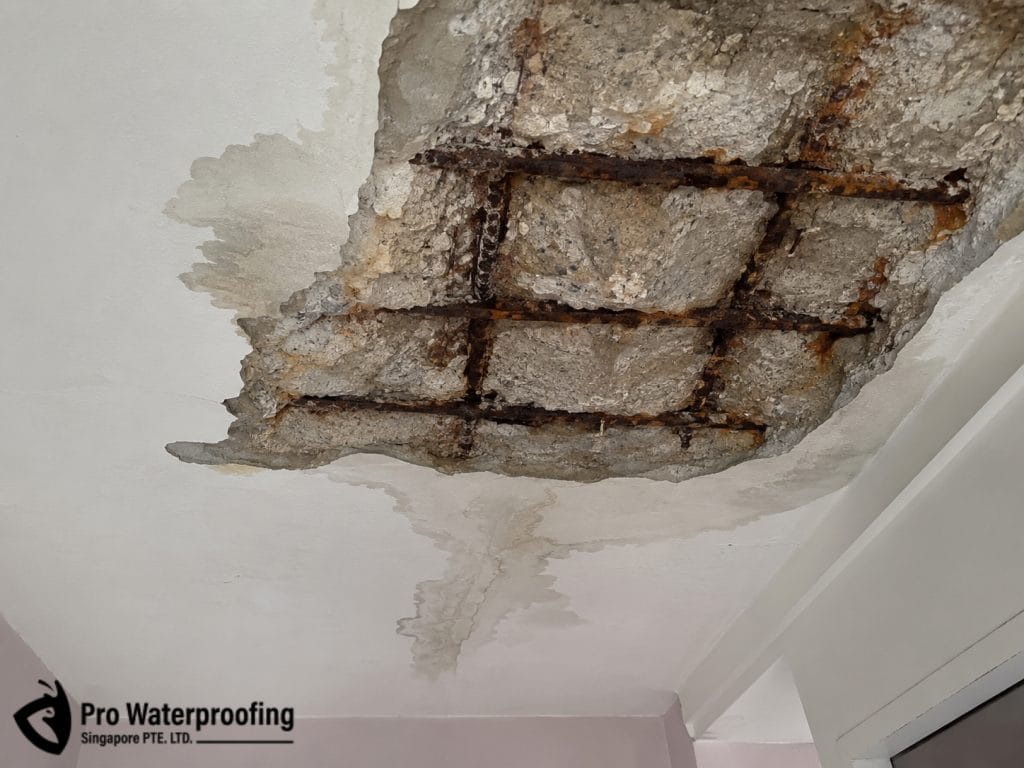
One of the most dangerous consequences of long-term water infiltration is spalling concrete. This structural defect occurs when moisture reaches the steel reinforcement bars (rebars) embedded inside reinforced concrete. As the steel corrodes, it expands, creating enormous internal pressure that eventually causes the surrounding concrete to crack, separate, and fall away.
Spalling concrete is more than a cosmetic issue. Loose concrete can fall without warning, posing a serious safety hazard to occupants while weakening the structural integrity of the building.
At Pro Waterproofing Singapore PTE. LTD., we provide comprehensive waterproofing and concrete repair solutions that address both the source of water seepage and the resulting structural damage. Early intervention helps prevent expensive repairs, protects your property, and ensures a safer living or working environment.
What Is Spalling Concrete?
Spalling concrete refers to the breaking, cracking, or flaking of concrete caused by internal deterioration. In most cases, the problem begins when water penetrates the concrete through cracks, failed waterproofing systems, leaking roofs, balconies, bathrooms, external walls, or deteriorated construction joints.
Once moisture reaches the reinforcing steel, corrosion begins. Rust occupies a much larger volume than the original steel, generating tremendous pressure inside the concrete. As this pressure increases, the concrete eventually cracks and separates from the reinforcement bars.
The damaged concrete may first appear as hairline cracks, hollow-sounding surfaces, or bulging plaster before eventually breaking away in heavy chunks.
How Water Seepage Leads to Spalling Concrete
The process of concrete spalling develops gradually over time.
Stage 1 – Water Penetration
Rainwater or moisture enters the concrete through damaged waterproofing, cracks, porous concrete, leaking balconies, roofs, bathrooms, or external walls.
Stage 2 – Moisture Reaches Reinforcement Bars
As water travels deeper into the concrete, it eventually reaches the embedded steel reinforcement.
Stage 3 – Steel Corrosion Begins
Continuous exposure to moisture and oxygen causes the reinforcement bars to rust.
Stage 4 – Expansion of Rust
Corroded steel expands significantly, creating powerful internal pressure within the surrounding concrete.
Stage 5 – Concrete Cracking
The expanding steel forces the concrete to crack and separate from the reinforcement.
Stage 6 – Concrete Falls Away
Large pieces of concrete detach from the ceiling or wall, exposing severely corroded reinforcement bars and creating a serious safety hazard.
Common Causes of Spalling Concrete in Singapore
Singapore’s tropical climate creates ideal conditions for water-related concrete deterioration.
- Persistent ceiling leaks
- Roof waterproofing failure
- Bathroom water seepage
- Balcony leakage
- External wall seepage
- Window frame leakage
- Cracked waterproof membranes
- Poor drainage systems
- Ageing buildings
- Long-term moisture exposure
Warning Signs of Spalling Concrete
Early detection can prevent major structural repairs.
- Brown or yellow water stains on ceilings
- Cracks in concrete surfaces
- Peeling paint
- Bubbling plaster
- Rust stains on ceilings or walls
- Hollow-sounding concrete
- Bulging ceiling surfaces
- Small concrete fragments falling
- Exposed reinforcement bars
- Large sections of loose concrete
If you observe any of these warning signs, immediate professional inspection is strongly recommended.
Why Spalling Concrete Is Dangerous
Risk of Falling Concrete
Loose concrete can detach without warning, posing a serious risk of injury to occupants, visitors, and workers.
Structural Deterioration
As reinforcement bars continue corroding, the strength of the reinforced concrete element may gradually decline.
Increasing Repair Costs
Small ceiling leaks are generally much less expensive to repair than advanced concrete spalling requiring structural restoration.
Property Value Reduction
Visible structural defects can negatively affect the appearance, marketability, and value of a property.
Ongoing Water Damage
If the original source of water seepage remains untreated, corrosion will continue even after cosmetic repairs.
The Importance of Early Waterproofing
Waterproofing is the first line of defence against concrete deterioration. By preventing moisture from entering the building structure, professional waterproofing helps protect reinforcement bars from corrosion and significantly extends the lifespan of reinforced concrete.
Whether the water originates from a leaking roof, balcony, bathroom, external wall, or window frame, identifying and eliminating the source is essential before repairing the damaged concrete.
Our Professional Spalling Concrete Repair Process
At Pro Waterproofing Singapore PTE. LTD., every repair begins by addressing the root cause of water infiltration before restoring the damaged concrete.
Step 1 – Comprehensive Inspection
Our specialists identify the source of water seepage and assess the extent of structural deterioration.
Step 2 – Waterproofing Repairs
The leaking area is professionally waterproofed using the most suitable repair system to prevent future water ingress.
Step 3 – Removal of Damaged Concrete
Loose and deteriorated concrete is carefully removed until sound material is reached.
Step 4 – Reinforcement Bar Treatment
Exposed steel reinforcement is cleaned to remove corrosion before protective anti-corrosion treatment is applied.
Step 5 – Structural Concrete Repair
High-quality repair mortar is used to rebuild the damaged concrete while restoring structural integrity.
Step 6 – Surface Finishing
The repaired surface is levelled, prepared, and finished to blend with the surrounding ceiling or wall.
Step 7 – Protective Coating
Where appropriate, protective waterproof coatings are applied to provide additional resistance against future moisture penetration.
Benefits of Professional Concrete Repair
- Eliminates loose concrete hazards
- Protects reinforcement bars from further corrosion
- Restores structural durability
- Prevents recurring water damage
- Improves building safety
- Extends the service life of reinforced concrete
- Enhances appearance
- Reduces future maintenance costs
- Protects long-term property value
- Provides peace of mind
Properties We Serve
Our waterproofing and concrete repair services are suitable for:
- HDB Flats
- Condominiums
- Landed Houses
- Commercial Buildings
- Office Buildings
- Factories
- Warehouses
- Industrial Facilities
- Schools
- Institutional Buildings
How to Prevent Spalling Concrete
Preventive maintenance is always more economical than major structural repairs.
- Repair water leaks immediately
- Maintain roof waterproofing systems
- Inspect balconies and external walls regularly
- Repair cracks promptly
- Maintain proper drainage systems
- Schedule periodic waterproofing inspections
- Address ceiling stains without delay
- Repair damaged sealants around windows
- Monitor damp areas after heavy rainfall
- Use professional waterproofing solutions
Frequently Asked Questions
What causes spalling concrete?
Spalling concrete is typically caused by water penetrating reinforced concrete and corroding the embedded steel reinforcement bars. As the steel rusts and expands, it cracks and breaks the surrounding concrete.
Is spalling concrete dangerous?
Yes. Falling concrete can cause injury and may indicate ongoing structural deterioration that requires immediate professional attention.
Can repainting fix spalling concrete?
No. Cosmetic repairs do not address the underlying water infiltration or reinforcement corrosion. The source of moisture and the damaged concrete must both be professionally repaired.
Can waterproofing prevent future spalling?
Yes. Effective waterproofing prevents moisture from entering the concrete, significantly reducing the risk of reinforcement corrosion and future spalling.
Should I repair a small ceiling leak immediately?
Absolutely. Early waterproofing intervention is the most effective way to prevent minor leaks from developing into serious structural problems.
Protect Your Property Before Minor Water Damage Becomes a Major Structural Problem
Ignoring a ceiling leak may seem like a way to postpone repairs, but the hidden damage inside reinforced concrete continues to progress every day. As moisture reaches the reinforcement bars, corrosion accelerates, concrete weakens, and repair costs increase substantially.
Professional waterproofing combined with timely concrete repair is the most effective way to stop water intrusion, restore structural integrity, and protect the safety of your family, employees, tenants, or customers. Investing in early intervention today can help you avoid extensive structural repairs and preserve the long-term value of your property for years to come.