
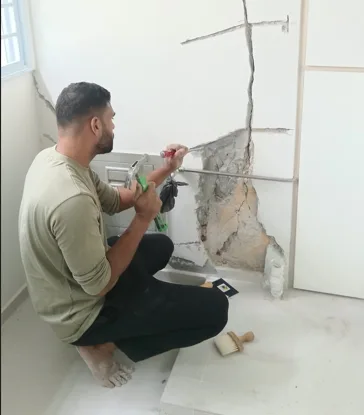
Wall Crack Repair in Singapore: Why Painting Over Spalling Concrete is Dangerous
Understanding Deep Wall Cracks and Spalling Concrete
Many homeowners in Singapore notice hairline cracks on their walls and assume it's just normal wear and tear. However, when those cracks grow deeper, wider, and start running across the wall, it is a clear symptom of a severe internal issue: water seepage and spalling concrete.
At Pro Waterproofing Singapore PTE. LTD, we specialize in diagnosing and executing heavy-duty structural repairs for damaged walls. We don't just cover up the problem鈥攚e fix it at its source.
馃毃 DANGER: Painting over a cracked, spalling wall is like putting a band-aid on a broken bone. The underlying rusting and structural deterioration continues鈥攁nd the crack will reappear within months, often worse than before.
The Hidden Danger Behind the Crack
Deep cracks rarely happen on their own. They are usually the result of water entering the concrete structure鈥攐ften from an external wall leak or a leaking pipe. When this water reaches the steel reinforcement bars (rebars) inside the wall, the steel begins to rust.
The process unfolds in stages:
- Water Infiltration: Rainwater or plumbing leaks penetrate the concrete through cracks, porous surfaces, or failed waterproofing.
- Carbonation: Carbon dioxide from the air reacts with the alkaline concrete, reducing its pH and destroying the protective oxide layer around the steel.
- Rust Formation: The steel reinforcement begins to rust (oxidize). Rust occupies up to 6 times the volume of the original steel.
- Internal Pressure: As the steel expands, it exerts immense pressure on the surrounding concrete鈥攗p to 4,000 psi.
- Cracking and Spalling: The concrete cracks, bulges, and eventually breaks apart, exposing the rusting rebar.
Rust expands up to several times its original volume. This massive internal pressure pushes against the concrete, causing it to bulge, crack the plaster, and eventually break apart. If you simply apply putty and paint over a crack like this, the rusting process continues underneath, and the crack will reappear within months.
Did You Know? A wall with spalling concrete can lose up to 40% of its load-bearing capacity in the affected area. This is not just a cosmetic issue鈥攊t is a structural safety concern.
Why Painting Over Spalling Concrete is Dangerous
Many homeowners make the mistake of treating wall cracks as a cosmetic problem. They apply putty, sand it smooth, and paint over it鈥攐nly to see the crack reappear weeks or months later. Here's why this approach is not just ineffective, but potentially dangerous:
- It Masks the Real Problem: Painting over a crack hides the visible symptom but does nothing to stop the underlying water seepage and rebar corrosion.
- The Rusting Continues: Without treating the rusted rebar, the corrosion process accelerates. The expanding rust will eventually crack the new paint and plaster, often more severely than before.
- Structural Deterioration Worsens: As the rebar continues to rust and expand, the concrete around it weakens. This can lead to larger chunks of concrete breaking off鈥攁 serious safety hazard.
- Water Damage Spreads: The trapped moisture continues to travel through the wall, potentially affecting adjacent areas and causing mold growth.
- You Pay Twice: The temporary cosmetic fix costs money, and when the problem inevitably returns, you'll need to pay for a proper repair anyway鈥攐ften at a higher cost due to the worsened condition.
鈿狅笍 Warning Signs That Require Professional Attention:
- Cracks wider than 2 mm.
- Cracks running diagonally or in a stair-step pattern.
- Bulging or blistering plaster.
- Rust stains on the wall surface.
- Hollow sounds when tapping the wall.
- Chunks of concrete falling off.
- Visible exposed rebar.
Our Professional Repair Method
As demonstrated by our specialists on-site, a permanent fix requires exposing the problem. We follow a meticulous, multi-step protocol that addresses both the structural damage and the underlying water source:
1. Detailed Inspection & Moisture Mapping
We use thermal imaging cameras and moisture meters to identify all areas of water ingress and hidden dampness. We also assess the extent of rebar corrosion and structural damage.
2. Safe Removal of Spalled Concrete
Using specialised chipping hammers and grinders, we carefully remove all loose, cracked, and spalled concrete. We chip back to sound concrete around the perimeter of the damaged area to ensure a proper bond for the repair material.
3. Rebar Treatment & Rust Removal
Exposed steel reinforcement is treated with a rust converter and inhibitor. We mechanically remove rust using wire brushes and abrasive blasting, then apply a protective anti-corrosion coating to prevent future rusting.
4. Structural Patching
We apply a high-strength, polymer-modified repair mortar to rebuild the concrete section. This mortar is formulated to bond strongly to the existing concrete, match the substrate's thermal expansion, and provide structural integrity.
5. Waterproofing & Sealing
After the repair mortar cures, we apply a waterproofing coating to the repaired area to prevent future water ingress. For wall leaks, we may also use PU injection grouting to seal cracks from the negative side.
6. Finishing & Painting
Once the repair is complete, we apply a skim coat to restore a smooth surface, followed by a primer and finish coat to match your wall's existing colour.
Pro Tip: Wall crack repair should always be accompanied by fixing the underlying water source. If the external wall leak or pipe leak is not repaired, the spalling will recur. We provide a comprehensive assessment and can coordinate with your neighbour or management to resolve the root cause.
DIY Patch Job vs. Professional Wall Crack Repair
| Factor | DIY Putty & Paint | Professional Repair |
|---|---|---|
| Rust Treatment | Not addressed鈥攔ust continues to spread | Complete rust removal and anti-corrosion coating |
| Repair Material | Putty or regular cement鈥攑oor bond, cracks again | Polymer-modified structural mortar鈥攕trong, durable bond |
| Water Source | Not addressed鈥攕palling returns | Root cause identified and repaired |
| Structural Integrity | Not restored鈥攚all remains weakened | Fully restored with structural-grade materials |
| Safety | Risk of falling debris | Professional containment and safety protocols |
| Warranty | None | Up to 10 years |
| Long-Term Outcome | Temporary fix鈥攑roblem returns within months | Permanent repair鈥攕tructural integrity restored |
Benefits of Professional Wall Crack Repair
- 鉁� Permanent Structural Fix: Restores the wall's load-bearing capacity and prevents further deterioration.
- 鉁� Stops Water Seepage: Addresses the root cause of the crack鈥攏ot just the visible symptom.
- 鉁� Prevents Recurring Spalling: Treats the rusted rebar so the spalling does not return.
- 鉁� Improves Safety: Eliminates the risk of falling concrete chunks.
- 鉁� Preserves Property Value: A structurally sound wall maintains your property's value and appearance.
- 鉁� Long-Lasting Protection: Backed by our 10-year workmanship warranty.
Common Causes of Wall Cracks in Singapore
Understanding why wall cracks occur helps prevent future problems. The most common causes include:
- Water Seepage: Rainwater penetrating through external walls or leaking pipes within the wall.
- Thermal Expansion & Contraction: Singapore's hot days and cool nights cause building materials to expand and contract, stressing the walls.
- Structural Settlement: Minor settling of the building foundation can cause cracks to appear.
- Poor Initial Workmanship: Inadequate concrete cover over rebar or poor-quality materials accelerate deterioration.
- Ageing Materials: Older buildings are more susceptible to carbonation and chloride attack, which lead to rebar corrosion.
- Vibration: Nearby construction or heavy traffic can cause micro-cracks that worsen over time.
Preventing Wall Cracks and Spalling Concrete
- 鉁� Maintain Exterior Waterproofing: Regularly inspect and repair external wall waterproofing to prevent water ingress.
- 鉁� Fix Leaks Promptly: Address any plumbing leaks or water stains immediately鈥攄on't wait for cracks to appear.
- 鉁� Apply Anti-Carbonation Coatings: Protective coatings can slow the carbonation process that leads to rebar corrosion.
- 鉁� Schedule Regular Inspections: Have a professional inspect your walls every 3鈥�5 years, especially in older buildings.
- 鉁� Seal Hairline Cracks Early: Treat small cracks before they allow water to reach the rebar.
- 鉁� Ensure Proper Drainage: Keep gutters and drains clear to prevent water from pooling near walls.
Don't Compromise on Safety
A cracking wall is a weakened wall. Trust the professionals to restore your home's safety and beauty. With our 10-year workmanship warranty and BCA-approved repair methods, you can be confident that your wall is restored to a safe, structurally sound condition.
Contact us today for a free, no-obligation site inspection and quotation.
馃摓 Request a Free Wall Crack Inspection
Frequently Asked Questions About Wall Crack Repair & Spalling Concrete
What causes deep wall cracks in Singapore?
Deep wall cracks in Singapore are commonly caused by water seepage through failed waterproofing, which leads to rebar corrosion. Other factors include thermal expansion and contraction, structural settlement, poor initial workmanship, ageing materials, and vibration from nearby construction. When water reaches the steel reinforcement inside the wall, the rusting process causes the concrete to crack and spall.
Is it safe to just paint over a wall crack?
No. Painting over a wall crack is dangerous because it masks the underlying problem without fixing it. The rusting rebar continues to expand beneath the surface, and the crack will reappear within months鈥攐ften worse than before. More importantly, the structural integrity of the wall continues to deteriorate, posing a safety risk. Professional repair is the only permanent solution.
How much does wall crack repair cost in Singapore?
Costs typically range from $500 to $3,000 depending on the extent of the damage, the number of affected areas, and the repair method required. Minor repairs may cost $500鈥�$1,000, while extensive structural repairs may cost $2,000鈥�$3,000+. We provide a detailed, no-obligation quote after a site inspection.
What is spalling concrete and why is it dangerous?
Spalling concrete is the breaking, cracking, or flaking of concrete surfaces caused by the corrosion and expansion of embedded steel reinforcement. When rebar rusts, it expands up to 6 times its original volume, exerting immense internal pressure that causes the concrete to crack and break off. It is dangerous because falling concrete chunks can cause serious injury, and the structural integrity of the wall or ceiling is compromised.
Does HDB cover wall crack repair?
HDB may cover certain types of wall crack repair under the Goodwill Repair Assistance (GRA) scheme, where costs are shared between HDB and the flat owners. However, coverage depends on the cause of the cracks and the age of the flat. For external wall cracks causing seepage, HDB may take responsibility for the repair. We recommend contacting your HDB branch for the latest guidelines.
Can I repair spalling concrete myself?
We do not recommend DIY repair for spalling concrete. A proper repair requires removing the spalled concrete, treating the rusted rebar with an anti-corrosion coating, applying a structural repair mortar, and addressing the water source that caused the problem. Without professional treatment, the rusting process will continue, and the repair will fail. Additionally, working on a damaged wall or ceiling poses safety risks.
How long does wall crack repair take?
For a typical wall crack repair, the process takes 1 to 3 days depending on the extent of the damage and the curing time required for the repair mortar and waterproofing coatings. More extensive repairs may take longer. We will provide a detailed timeline during the site inspection.
How can I prevent wall cracks and spalling concrete?
Preventing wall cracks and spalling concrete involves maintaining your exterior waterproofing, fixing leaks promptly, applying anti-carbonation coatings, and scheduling regular professional inspections. Early intervention is key鈥攕eal hairline cracks before they allow water to reach the rebar, and address any water seepage immediately.